
Consolidation in trading: signs and range trading
 ParadTrade
Consolidation is a phase of sideways price movement when the market accumulates strength before a new impulse.
Key signs of consolidation
1. Lateral movement in range
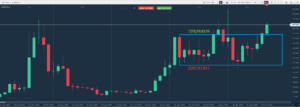
The price fluctuates between clear support and resistance levels without a clear trend.
2. Narrowing volatility
The amplitude of the oscillations decreases (for example, a triangle or rectangle is formed).
3. Decrease in trading volume
Within a consolidation, volumes fall, and during a breakdown, they increase sharply.
4. Multiple Bounds Tests
The price touches support and resistance several times, but fails to break through them.
Accumulation and market patterns
5. Accumulation of positions
Large players accumulate assets before a new movement (active in the final phase of consolidation).
6. Formation of patterns
Shapes may appear: rectangle, triangle, flag, wedge, which indicate a probable breakdown.
7. Approaching the top/bottom of a trend
Consolidation after a strong movement can mean a reversal or continuation of the trend.
8. Reaction to moving averages
In a sideways trend, the price often “sticks” to the MA (50, 200), which can serve as a filter for a breakout.
False breakouts and the move out of the range
9. False breakouts (fakeouts) inside the range
Before a true breakout, false takeouts beyond the levels with a quick return are possible.
10. Completion of consolidation by breakout
The accumulation phase ends with either an impulse towards the trend or a reversal.