
Open interest in trading: what it shows and how to use it
 ParadTrade
Open Interest (OI) is the total number of open (not closed) contractsfor futures or options on a specific asset.
Important:
-
OI increases when new positions enter the market (buyer + seller create a contract).
-
OI falls when positions close.
-
OI does not changewhen one position simply passes from one participant to another.
Open interest shows capital involvement, not price direction.
Which markets and assets is it most applicable
Open interest only works where there are derivatives.
Main markets
-
Futures (main area of application)
-
Options
-
Perpetual contracts (crypto)
Assets where OI is most informative
-
Cryptocurrencies (BTC, ETH, major alts)
High leverage → rapid changes in OI -
Indices (S&P 500, Nasdaq, DAX)
-
Raw materials (oil, gold, gas)
-
Currency futures
On the spot market open interest does not exist.
How to use open interest
Basic principle
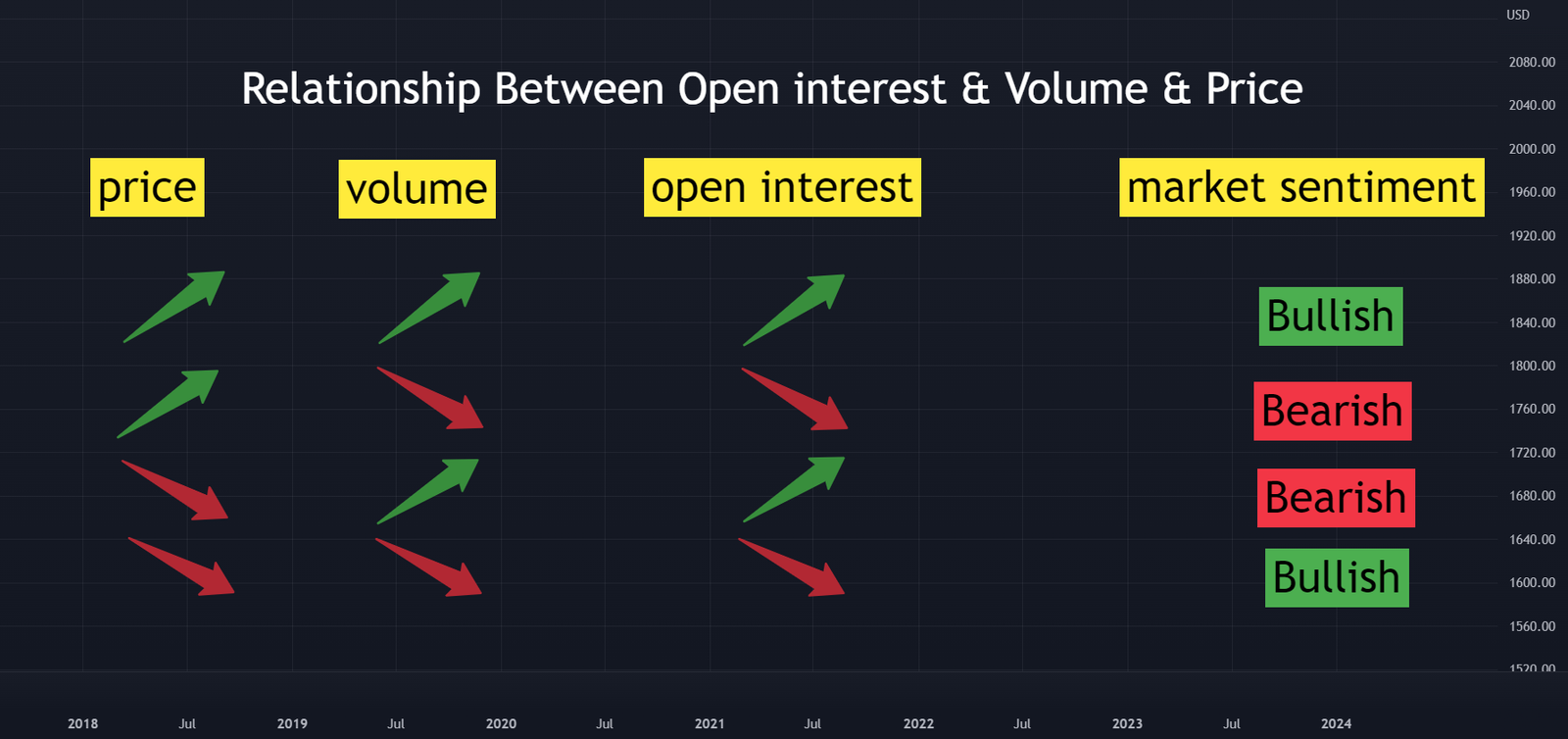
Open interest is always analyzed together with the price, and not separately.
Key combinations
Price ↑ + OI ↑
→ new capital enters the market
→ the movement is confirmed
→ the trend is intensifying
Price ↑ + OI ↓
→ positions are closed
→ growth at fixation
→ movement may be unstable
Price ↓ + OI ↑
→ new short positions open
→ pressure increases
→ acceleration or short squeeze possible
Price ↓ + OI ↓
→ exit of participants
→ attenuation of movement
→ the market is “unloading”
OI answers the question: “Do they enter or exit the market?”
What are the specifics of open interest and how does it differ from classical indicators
Main difference
-
RSI, MACD, MA → price derivatives
-
Open Interest → position derived
That is: the price shows the result, OI shows the process.
What makes OI unique
-
It reflects real participation of money, especially with leverage
-
Allows you to understand:
-
is movement created by new positions
-
or the market is simply “putting the squeeze” on the old ones
-
OI is not a signal
This is context:
-
confirmation
-
warning
-
false movement filter.