
Correction in trading: how to recognize a price rollback after a breakout
 ParadTrade
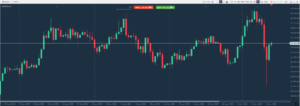
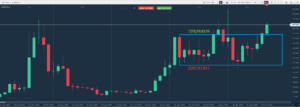
Correction after a breakthrough movement (rollback from a level) is a temporary return of the price to the zone of the broken level before the continuation of the main trend. Here are 10 key characteristics of this condition:
How to identify a correction after a breakout
1. Previous level breakout
A correction occurs after a confident breakout of a significant support/resistance level or trend line.
2. Moderate retracement (usually 30–50%)
The price rolls back part of the previous movement (most often Fibonacci: 38.2%, 50% or 61.8%).
3. Reduction of volume in correction
Trading volumes decrease compared to the breakout candle/bar, indicating weakness in the pullback.
4. Test of a broken level
The price returns to the broken level, which now changes its role (the former support becomes resistance and vice versa).
5. Formation of continuation patterns
On a pullback, patterns such as “flag”, “pennant” or “triangle” may appear, signaling a likely continuation of the trend.
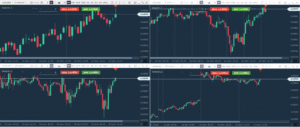
Higher-timeframe confirmation
6. Maintaining the general trend
Higher timeframes (such as daily or weekly) confirm the strength of the underlying trend.
7. Response to key levels
Corrections often end at Fibonacci levels, moving averages (such as the 50 or 200 MA) or psychological price points.
8. False breakouts are excluded
Before the correction there must be a clear breakdown confirmed by volume, and not a false breakthrough.
9. Time factor
The correction is usually shorter in time than the preceding impulse movement (for example, 1-3 candles versus 5-10).
Signals that the trend may resume
10. Continuation Signals
After the correction, confirmation of the trend resumption appears:
- Closing price outside the correction level.
- Increasing volume with a new movement.
- Reversal candlestick patterns (for example, engulfing or hammer).
How to use a correction in a trading plan
Important: A correction after a breakout is an opportunity to enter a trend at a better price, but confirmation of resumption of movement is required (for example, a rebound from a level with increasing volume).